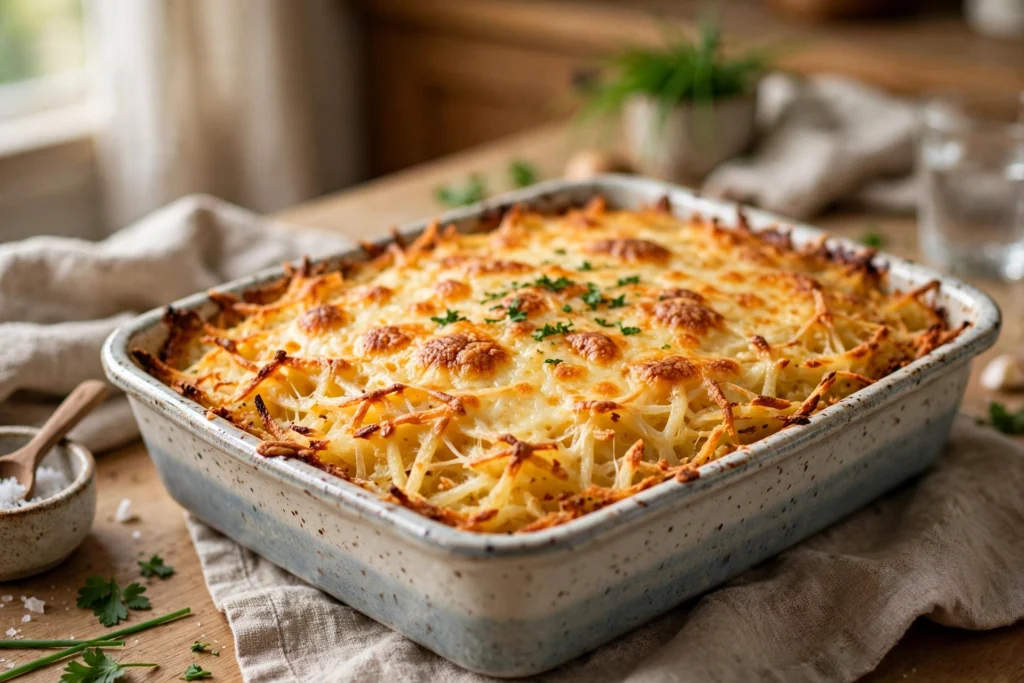
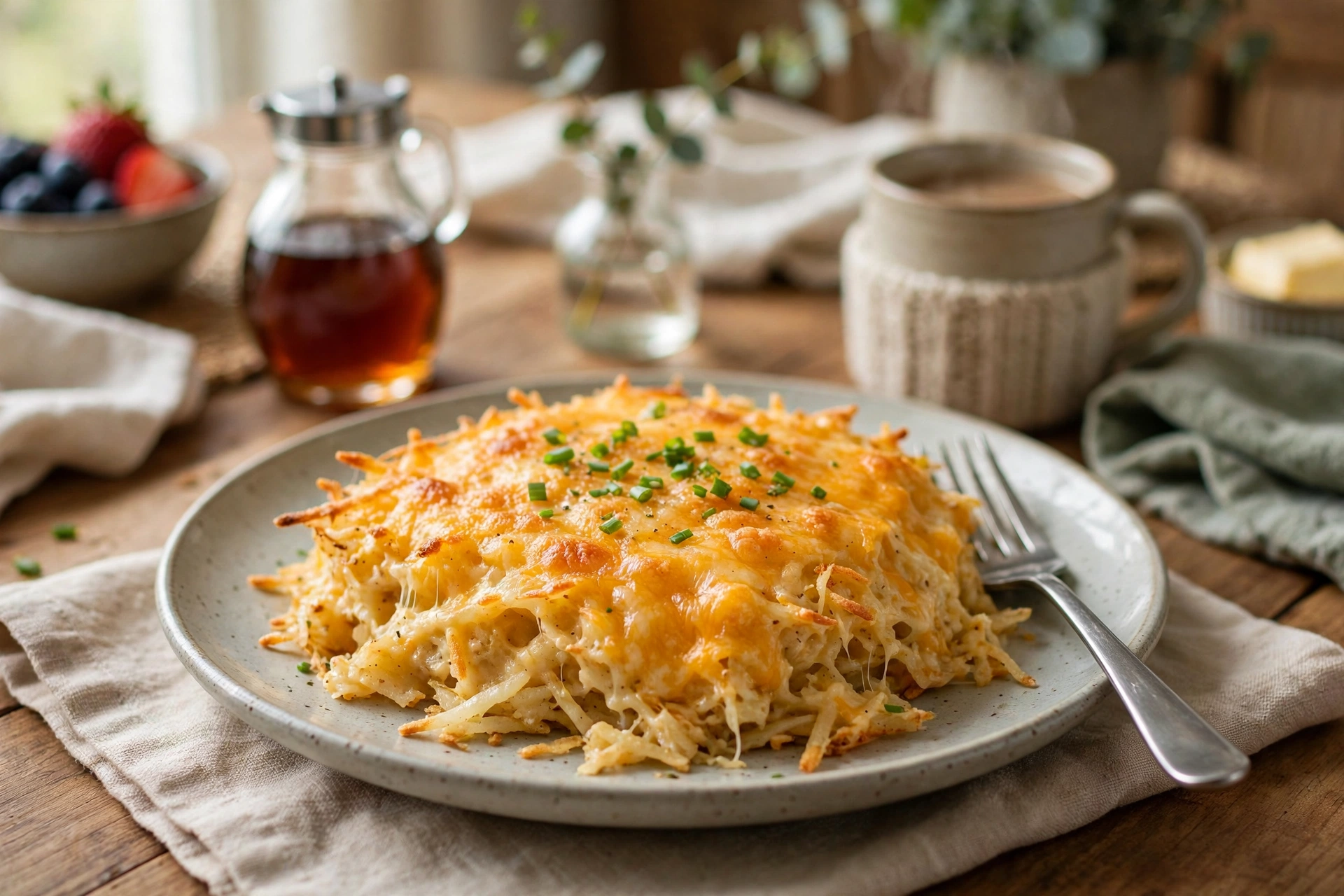
Quick answer: A cracker barrel hashbrown casserole recipe made at home is a baked dish of shredded potatoes, melted cheese, sour cream, butter, and onion, cooked until the top turns golden and crisp at the edges. This homemade-inspired version captures the cozy, country breakfast flavor many people love, without claiming to be the restaurant’s official recipe. Bake it at 350 degrees Fahrenheit for about 45 to 50 minutes, let it rest for 10 minutes, and serve it warm.
There is a reason this dish shows up at so many breakfast tables, holiday brunches, and church potlucks across the United States. It is warm, filling, and simple to put together, and it feeds a crowd without a lot of fuss. Shredded potatoes turn soft and tender in the oven, cheese melts into every corner, and the top gets just crisp enough to make each spoonful interesting. If you have ever enjoyed a cheesy potato casserole at a country restaurant and wished you could make something like it at home, this guide is for you.
Before we go further, one point matters. This is a homemade-inspired recipe, not the restaurant’s official recipe. Cracker Barrel does not publish its exact restaurant formula, and this article does not claim to reproduce it. What follows is a tested home-cooking approach that aims for a similar style: creamy, cheesy, golden, and comforting. This site is an independent guide and is not affiliated with Cracker Barrel.
What Makes a Hashbrown Casserole So Popular
A hashbrown casserole works because it balances three textures. The potatoes stay soft in the middle, the cheese adds richness, and the top layer bakes into a lightly crisp crust. Sour cream keeps the dish moist, butter adds depth, and onion gives it a gentle savory note that keeps the richness from feeling flat. Nothing here is fancy, and that is part of the appeal. Most of the ingredients are pantry staples, and the method is forgiving enough for a first-time cook.
It also fits almost any meal. Serve it at breakfast with eggs and sausage, at brunch next to fresh fruit, or at dinner beside roast chicken or ham. It travels well to a potluck, reheats well the next day, and scales up easily when guests are coming. For many families, it has become a holiday tradition, especially at Easter, Thanksgiving, and Christmas morning, when a dish that can sit in the oven while everyone gathers is worth its weight in gold.
If you are planning a full country-style breakfast at home, our breakfast guide can help you plan the rest of the table, from eggs and bacon to biscuits and gravy ideas.
Ingredients You Need
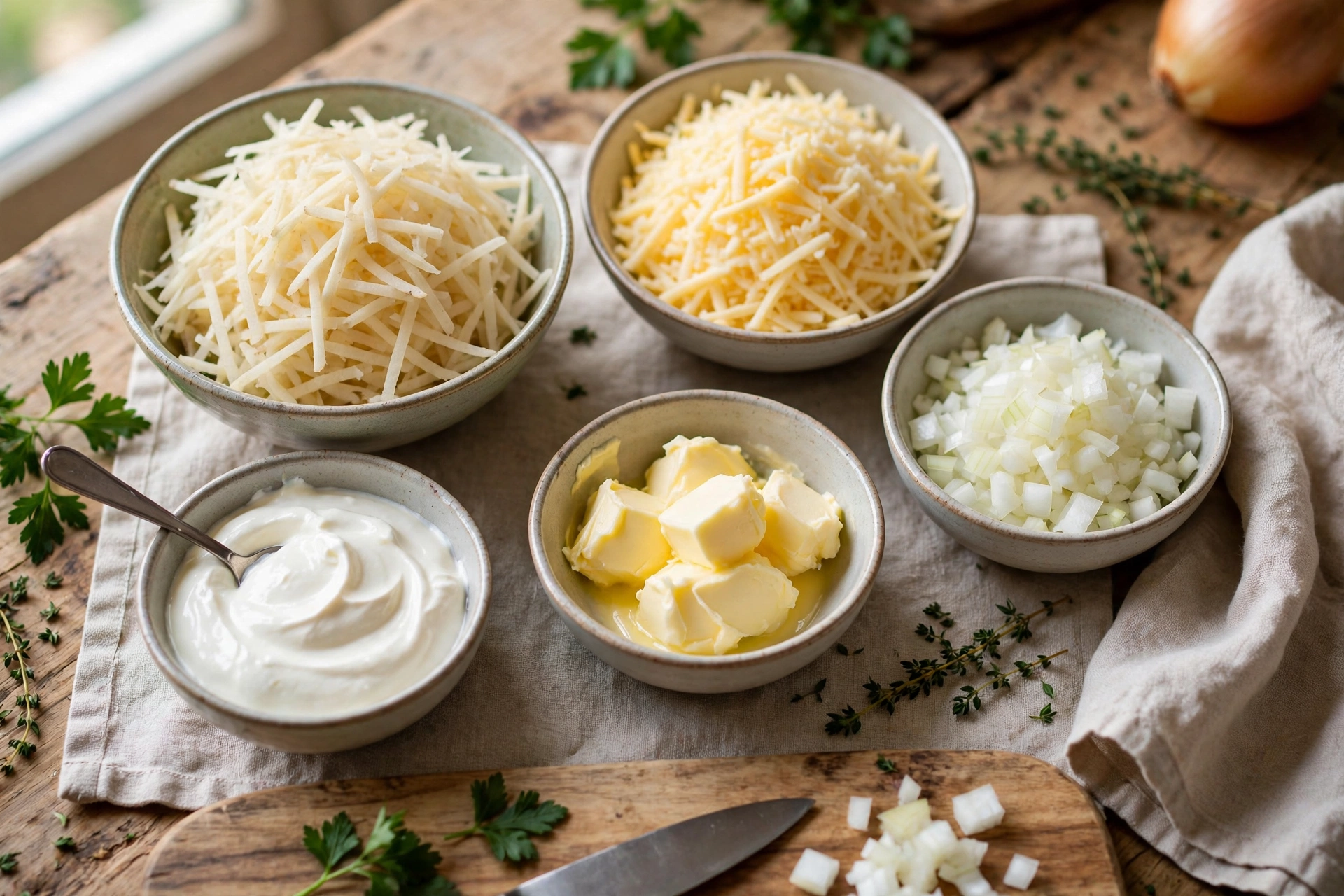
Good ingredients make a noticeable difference here, even though the list is short. Use frozen shredded hash browns that have been thawed in the refrigerator overnight, or shred fresh russet potatoes and squeeze out as much water as you can with a clean kitchen towel. Wet potatoes are the most common reason a casserole turns soggy, so this step deserves your attention.
For the cheese, a sharp cheddar gives the strongest flavor, while a mild cheddar melts into a smoother, gentler result. Many cooks mix the two. Sour cream adds tang and creaminess. Butter, melted, ties the whole dish together. A small amount of finely diced onion, salt, and black pepper rounds out the seasoning. Some cooks add a can of condensed cream of chicken soup for extra body, and that option is included below as a variation, not a requirement.
Full Ingredient List
- 2 pounds frozen shredded hash browns, thawed (about 8 cups)
- 2 cups shredded cheddar cheese, divided
- 1 cup sour cream
- 1/2 cup butter, melted, plus extra for greasing the dish
- 1 small onion, finely diced
- 1 teaspoon salt
- 1/2 teaspoon black pepper
- Optional: 1 can (10.5 ounces) condensed cream of chicken soup
- Optional topping: 2 tablespoons chopped fresh chives or parsley
This recipe serves about 8 people as a side dish, or 6 people as a main breakfast dish. If you are cooking for a crowd, double the recipe and use a larger baking pan, adding about 10 extra minutes to the bake time and checking the center before you call it done.
How to Make Cracker Barrel Hashbrown Casserole Recipe at Home
Start by heating your oven to 350 degrees Fahrenheit and greasing a 9 by 13 inch baking dish with butter. Place the thawed hash browns in a large bowl and pat them dry with paper towels if they look wet. Add the sour cream, melted butter, diced onion, salt, and pepper, plus the soup if you are using it. Stir until everything is evenly mixed, then fold in 1 and 1/2 cups of the cheese, saving the rest for the top.
Spread the mixture into the baking dish in an even layer. Press it down gently with the back of a spoon so it bakes evenly, but do not pack it so hard that it turns dense. Sprinkle the remaining cheese over the top. Cover the dish loosely with foil for the first 25 minutes so the potatoes cook through without drying out, then remove the foil and bake for another 20 to 25 minutes until the top is golden and bubbling at the edges.
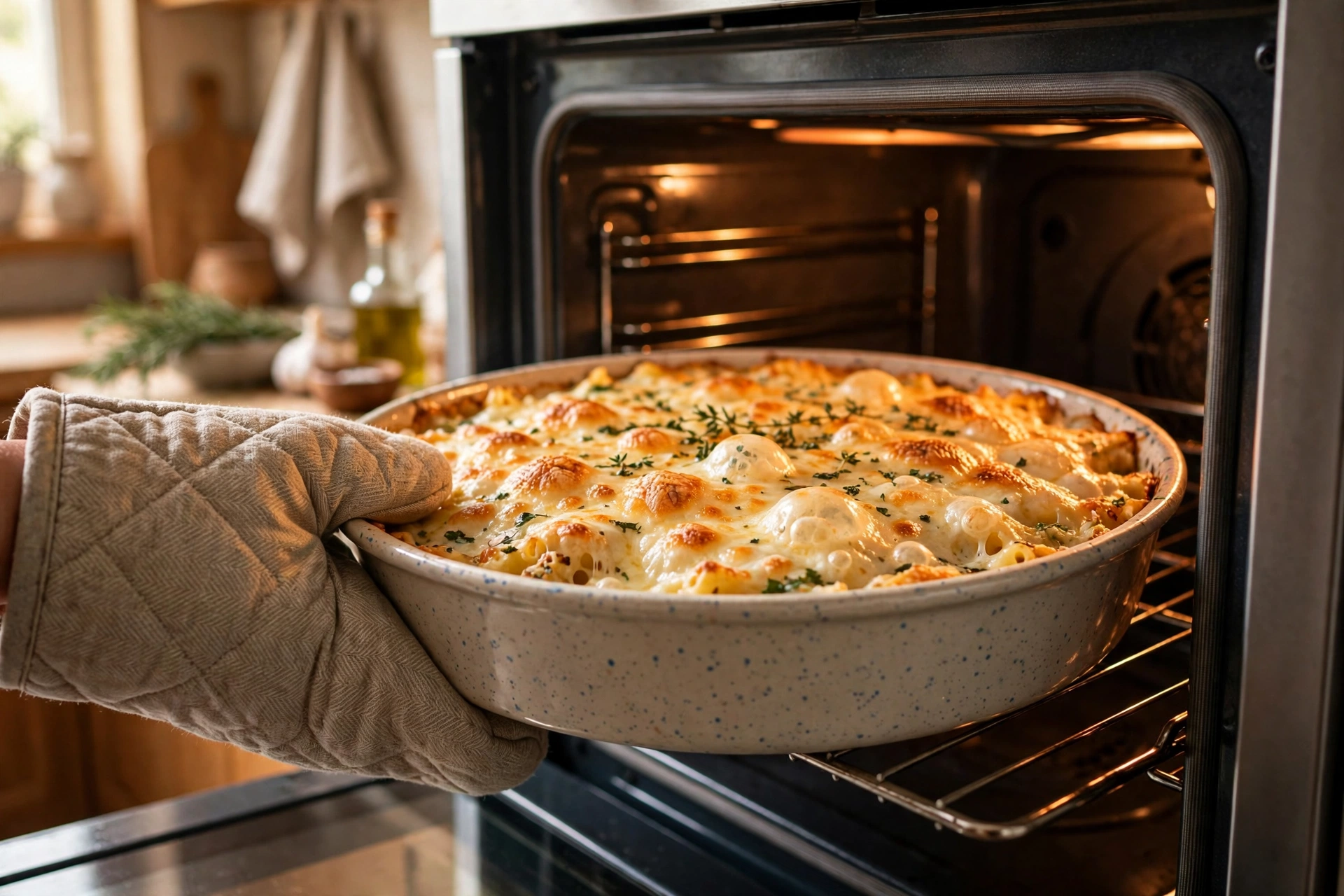
Let the casserole rest for 10 minutes before serving. This rest matters more than it seems. It lets the cheese set slightly, so slices hold together instead of sliding apart, and it lets the heat even out so the first serving is not scorching while the middle is still lukewarm. Sprinkle chives or parsley on top if you like a fresh finish.
Step by Step Summary
- Heat the oven to 350 degrees Fahrenheit and grease a 9 by 13 inch dish.
- Thaw the hash browns and pat them dry.
- Mix potatoes, sour cream, butter, onion, salt, pepper, and soup if using.
- Fold in most of the cheese and spread the mixture in the dish.
- Top with the remaining cheese, cover with foil, and bake 25 minutes.
- Uncover and bake 20 to 25 minutes more until golden and bubbling.
- Rest 10 minutes, garnish, and serve warm.
Tips for the Best Texture
The difference between a good casserole and a great one usually comes down to moisture control and bake time. Thawed potatoes hold a surprising amount of water, so take a minute to press them dry. If you shred fresh potatoes, rinse them, then squeeze them in a towel until very little liquid comes out. A dry base bakes up fluffy instead of gluey.
Cheese choice matters too. Pre-shredded cheese contains anti-caking agents that can make melting less smooth, so shredding a block of cheddar at home gives a creamier result. If you only have pre-shredded cheese, it will still work, so do not let that stop you. Just expect a slightly firmer texture on top.
Oven temperatures vary, so start checking at the 40 minute mark. You want the center to be hot and the cheese fully melted, with golden spots across the top. If the top browns too fast, lay a loose sheet of foil over it for the last few minutes. If the center still looks pale and loose at 50 minutes, give it 5 more minutes and check again.
Variations Worth Trying
Once you know the base recipe, it is easy to shape it to your table. For a heartier breakfast casserole, stir in cooked, crumbled sausage or diced ham before baking. For a vegetable version, add sauteed mushrooms, bell peppers, or spinach, but cook them first so their water does not thin the dish. For a sharper flavor, swap half the cheddar for pepper jack or smoked Gouda.
A crunchy topping is another popular twist. Some cooks scatter buttered cornflakes or crushed crackers over the cheese for the last 15 minutes of baking. Others prefer a simple cheese-only top, which stays soft and gooey. Both are good, so pick the one your family likes. If you are serving this as part of a larger family meal, our guide to family meals has ideas for rounding out the menu.
What to Serve With It
At breakfast, this casserole pairs naturally with scrambled eggs, bacon or sausage, and fresh fruit. Biscuits with butter and jam complete the country breakfast feeling, and coffee or orange juice keeps the meal balanced. At brunch, add a green salad and a light fruit plate so the table does not feel too heavy.
At dinner, the casserole works as a side dish for roast chicken, baked ham, or meatloaf. A simple steamed vegetable, such as green beans or broccoli, adds color and freshness. Because the casserole itself is rich, lighter sides tend to work better than a second heavy starch. If you want an all-day breakfast theme, see our all-day breakfast ideas for more dishes that pair well with it.
Storing and Reheating Leftovers
Let leftovers cool to room temperature, then cover the dish tightly or move portions into airtight containers. Refrigerated casserole keeps well for 3 to 4 days. To reheat, cover a portion with foil and warm it in a 350 degree oven for about 15 to 20 minutes, or microwave single servings in short bursts, stirring halfway, until hot through.
For longer storage, freeze portions in freezer-safe containers for up to 2 months. Thaw overnight in the refrigerator before reheating. Frozen casserole may release a little extra moisture, so reheating it uncovered for the last few minutes helps the top crisp up again. As with any potato dish, use clean containers and do not leave it sitting out for more than 2 hours.
Common Mistakes to Avoid
The most common mistake is skipping the thaw and dry step. Frozen potatoes straight from the bag release water as they bake, and that water pools in the dish. The second mistake is overbaking, which dries out the edges and turns the cheese rubbery. Watch the color, not just the clock. The third mistake is cutting into the casserole right out of the oven, which leaves you with a loose, runny scoop instead of a neat serving. Ten minutes of rest fixes that.
Seasoning is the last easy fix. Potatoes need a fair amount of salt to taste their best, and a bland casserole is often just an under-salted one. Taste your mixture before baking if you are comfortable doing so with the raw ingredients handled safely, or simply follow the salt amount here and adjust next time. A pinch more black pepper or a spoonful of Dijon mustard stirred into the sour cream can also brighten the flavor without changing the character of the dish.
Frequently Asked Questions
Is this the official Cracker Barrel recipe?
No. This is a homemade-inspired recipe created to capture a similar country breakfast style. Cracker Barrel has not published its exact restaurant recipe, and this guide does not claim to reproduce it. It is an independent home-cooking version.
Can I use fresh potatoes instead of frozen hash browns?
Yes. Peel and shred about 2 pounds of russet potatoes, rinse them in cold water, and squeeze them very dry in a clean kitchen towel before mixing. Fresh potatoes give a slightly firmer bite, while frozen hash browns give a softer, more uniform texture.
Can I make hashbrown casserole ahead of time?
Yes. Assemble the casserole, cover it tightly, and refrigerate it for up to 24 hours before baking. Add about 10 minutes to the bake time when baking straight from the refrigerator, and check that the center is hot before serving.
Why is my casserole soggy?
Extra moisture is the usual cause. Thaw and pat the potatoes dry, cook any added vegetables first, and avoid adding extra liquid beyond the recipe. Baking uncovered for the final stretch also helps the top firm up.
Can I freeze hashbrown casserole?
Yes. Cool it fully, portion it into freezer-safe containers, and freeze for up to 2 months. Thaw overnight in the refrigerator and reheat covered in a 350 degree oven until hot through.
What cheese works best in hashbrown casserole?
Sharp cheddar gives the boldest flavor, mild cheddar melts the smoothest, and a mix of the two is a safe middle ground. Freshly shredded cheese melts more evenly than pre-shredded cheese, but either one works in this recipe.
Note: This is an independent cooking guide, as of October 2026. It is not affiliated with, endorsed by, or sponsored by Cracker Barrel. Restaurant menus and prices vary by location, so check the restaurant directly for current offerings.
To find a restaurant near you, visit the official Cracker Barrel locations page.
[…] more Cracker Barrel inspired cooking, see our guide to the Cracker Barrel hashbrown casserole recipe, our dinner guide in Cracker Barrel dinner menu with prices, and our breakfast overview in all day […]
[…] more country cooking inspiration, our guide to Cracker Barrel hashbrown casserole recipe pairs beautifully with this dish, and together they make a breakfast table that feels complete. If […]
[…] the meal from feeling too heavy late in the day. Readers who love that casserole can also check the hashbrown casserole recipe guide for a homemade version to try […]